
Lessons - Dance
Dance Integration Lessons
Choose a subject to find a lesson that integrates dance.
Math
Science
Social Studies
Native American
English Language Arts
Dance & Math
Counting to Ten with Dance
For example, in this lesson the teacher would:
- Assign each child a number 1-10
- Have students hop, skip, or jump around the room
- Call "Freeze!" and tell the students to strike a pose in the shape of their number using their arms and legs
- Select three different students and have the class guess which number they are representing
Hundreds of free lessons to get started today!
Explore Lessons
Dance & Science
Bacteria and Fungi
For example, in this lesson the teacher would:
- Introduce scientific concepts by leading students through a series of guided movement sequences without explanation.
- Use dance to explore characteristics of bacteria such as size, shape, replication, and movement.
- Help students embody different bacterial forms, including spherical, rod, and spiral shapes, through creative movement.
- Connect movement patterns to scientific vocabulary as students repeat and refine the dance with key terms.
- Guide students in creating and performing small group dances that represent fungi and their environments.
Hundreds of free lessons to get started today!
Explore Lessons
Dance & Social Studies
Egyptian Pyramids
For example, in this lesson the teacher would:
- Introduce key Egyptian artifacts and landmarks, including mastaba tombs, step pyramids, and the pyramids of Giza.
- Guide students in sequencing historical structures by matching images to time periods and pharaohs.
- Use movement to explore how pyramid structures evolved over time, from early burials to complex tombs.
- Have students work in groups to create pyramid-inspired shapes and movement phrases using their bodies.
- Connect historical understanding to performance by adding narration that explains how earlier structures influenced later designs.
Hundreds of free lessons to get started today!
Explore Lessons
Dance & Native American
Beauty Beside Me
For example, in this lesson the teacher would:
- Read Beauty Beside Me: Stories of My Grandmother's Skirts and guide students in connecting story moments to movement.
- Teach dance elements such as body, energy, space, and time through short movement experiences tied to pages from the book.
- Introduce Diné (Navajo) cultural knowledge and vocabulary in age-appropriate, tribe-approved ways.
- Lead students through repeated transition movements (like swaying and spinning) to support focus and smooth classroom flow.
- Invite students to create and share short dances that reflect teachings, traditions, and relationships highlighted in the story.
Hundreds of free lessons to get started today!
Explore Lessons
Dance & English
Leaf Man
For example, in this lesson the teacher would:
- Read Leaf Man by Lois Ehlert and guide students in noticing descriptive language, imagery, and movement ideas in the text.
- Introduce dance concepts such as levels, pathways, space, and locomotor movement through structured warm-up activities.
- Connect movement exploration to science concepts like wind, ecosystems, and life cycles.
- Have students plan and compose a dance solo using movement maps, descriptive words, metaphors, or similes.
- Provide opportunities for students to perform their solos and reflect on how movement and language convey meaning.
Hundreds of free lessons to get started today!
Explore Lessons
Top Lesson Plans
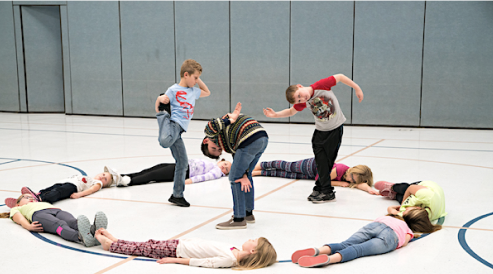
Math in Motion
3rd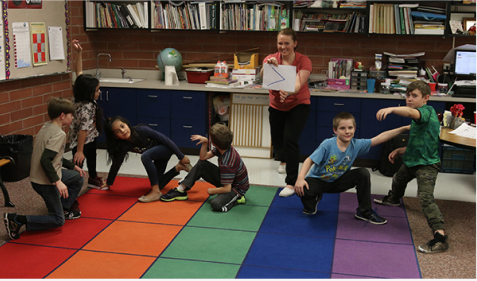
Number Ordering
2nd
Waddling Ones & Tobogganing Tens
K - 6thBenefits of Dance
Mind and Body
- Support physical development and a healthy lifestyle
- Integrate kinesthetic learning with conceptual understanding
- Nurture cognitive development and academic engagement
Social and Emotional Growth
- Promote social-emotional health and maturity
- Encourage social interaction and cooperation
- Provide students with multiple perspectives
Academic and Creative Thinking
- Help children develop literacy
- Foster critical thinking and creative problem-solving skills
Elements of Dance
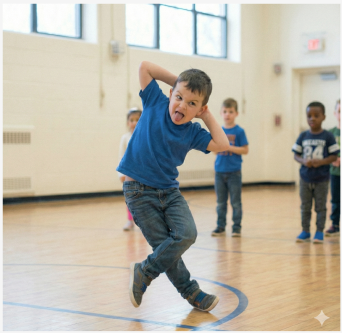
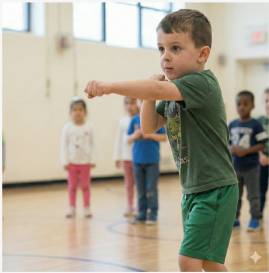
Body
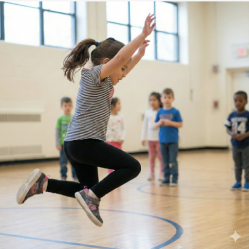
Motion
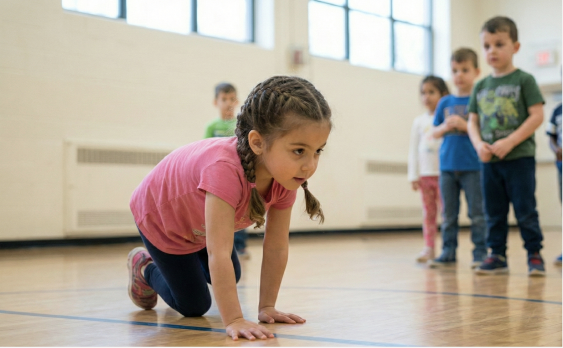
Energy
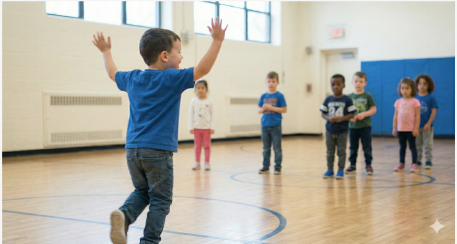
Space
Time