Literary Arts Integration Lessons
Choose a subject to find a lesson that integrates literary arts.
Literary Arts & Math
Pass the Book
For example, in this lesson the teacher would:
- Have students stand in a circle and introduce Pass the Book
- Model nonverbal reactions; have students pass the book using only expressions, movements, and sounds
- Model nonverbal reactions; have students pass the book using only expressions, movements, and sounds
- Reflect on which round was more engaging or challenging
Hundreds of free lessons to get started today!
Top Lesson Plans

Why Literary Arts?
"There is more treasure in books than in all the pirates' loot on Treasure Island and best of all, you can enjoy these riches every day of your life."
—Walt Disney
- Provide a natural way for children to learn and explore by expanding their imagination and increasing their exposure to new ideas and information.
- Encourage dispositions for teamwork and collaboration.
- Bring attention to the whole person, including physical, emotional, social, and intellectual aspects.
- Reinforce listening skills.
- Develop creativity, problem solving, and critical thinking.
- Enhance the ability to express through words and imagination.
- Boost confidence and build twenty-first century skills.
- Strengthen language and vocabulary development.
- Promote improved communication abilities, including listening, speaking, observing, and empathizing.
Elements and Tools
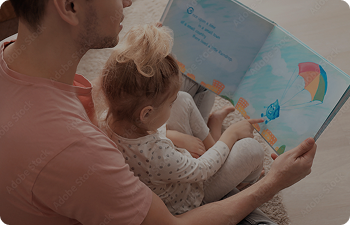
Most literature is centered around human characters, like Anne Shirley and her adoptive family in L.M. Montgomery's Anne of Green Gables. Buckbeak in Harry Potter, Mr. Tumnus in The Lion, the Witch, and the Wardrobe, and the anthropomorphic rabbit family in Richard Adam's classic Watership Down are examples of nonhuman characters. Nonhuman characters contribute meaning to stories via exhibiting a person-like quality of self-awareness.
Real characters can be either actual people or animals in nonfiction, or fictional figures in myths, legends, and stories. Fictional “real” characters, like Max in Where the Wild Things Are, exist within the story’s world and often resemble real people. Imaginary characters are purely creations of the author’s or story’s imagination. Both real and imaginary characters can be human or nonhuman.
Ebenezer Scrooge in Charles Dickens's A Christmas Carol is a good example of a dynamic character who undergoes a significant inner shift in personality, attitude, and behavior.
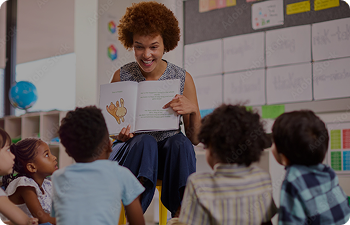
Like Atticus Finch in To Kill a Mockingbird, a static character does not experience inner change: Mr. Finch's moral convictions and firm stance on social issues prove immovable over the course of the story.
Describing a character's level of complexity, flat characters, like Crabbe and Goyle in Harry Potter, are undeveloped, simple, and uncomplicated characters that sometimes conform to stereotypes.
Reflecting a well-developed personality and significant depth, these include interesting and evolving characters that change with time, sometimes in ways that surprise the reader.
A narrowly defined character that relies heavily on cultural types to define personality, speech, and other characteristics. James MacGillivray's Paul Bunyan reflects a stereotyped character that typifies the tradition of frontier tall tales.
Exhibiting opposing or conflicting traits to another character is a trademark quality of foil characters, like Dr. Watson in Sherlock Holmes by Sir Arthur Conan Doyle.
Literary Arts in the Elementary Classroom
Dive deeper into literary arts and how to effectively integrate it in your classroom.